Energy
Tesla partner Panasonic says 30% energy density increase in lithium-ion batteries possible

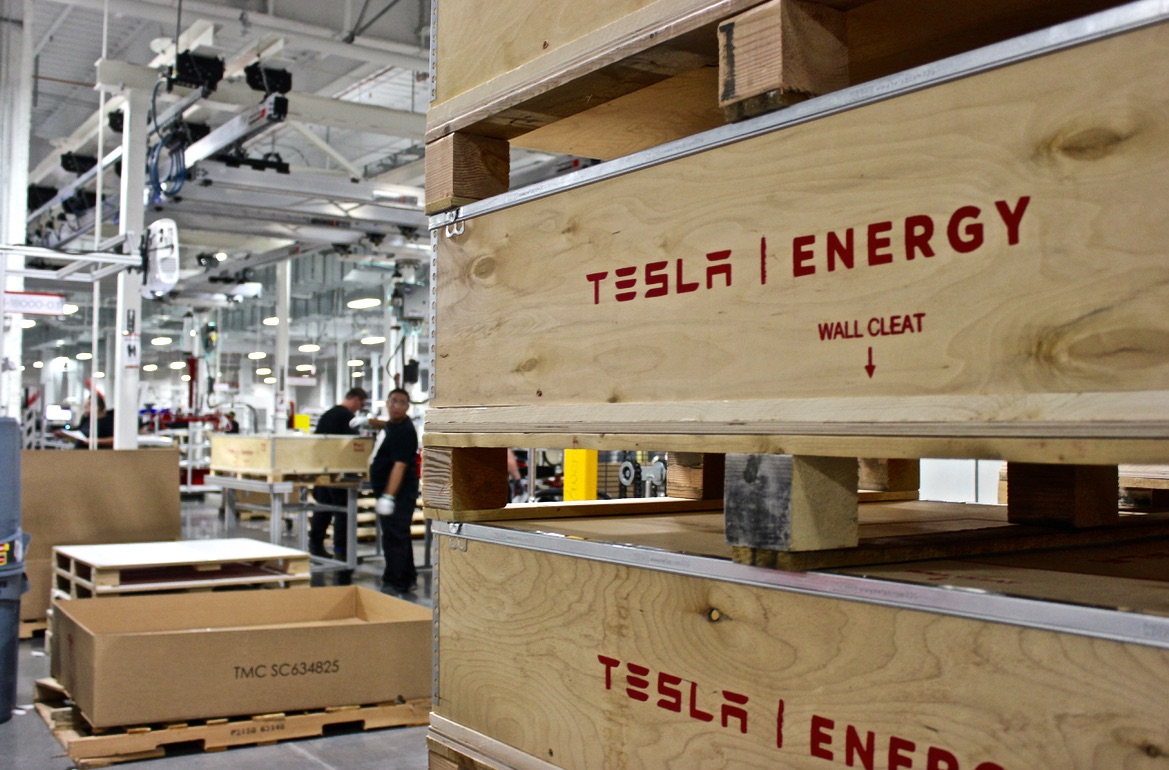
The market for lithium-ion batteries (LIBs) is expected to exceed $33 billion by 2019 and $26 billion by 2023, according to global market research firm SIS International Research. The success of Tesla and its Nevada-based Gigafactory facility has generated a lot of excitement in the LIB industry. Panasonic’s automobile battery sales are forecast to grow to $4 billion a year by March 2019, largely due to their partnership with Tesla.
“We think the existing technology can still extend the energy density of LIBs by 20% to 30%,” Panasonic’s President Kazuhiro Tsuga said. “But there is a trade-off between energy density and safety. So, if you look for even more density, you have to think about additional safety technology as well. Solid-state batteries are one [possible] answer.” These safety concerns about LIBs are also pushing Panasonic to look at alternative battery power sources.
Solid state batteries use a solid electrolyte instead of the electrolytic solution that is essential in transporting the positive lithium ions between the cathode and anode in today’s batteries. Researchers have succeeded in developing an efficient electrolytic solid material that significantly improves lithium ion conductance, raising hopes that batteries with much higher power densities are edging closer to practical applications.
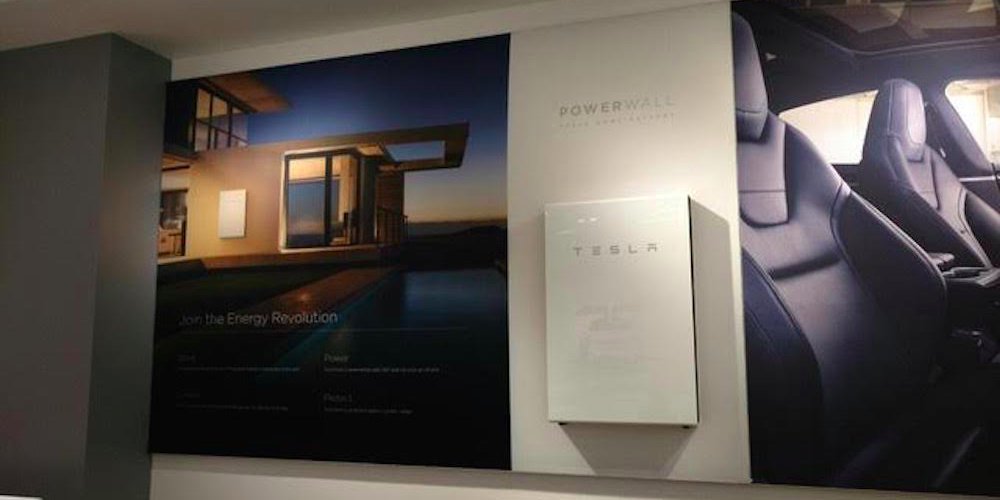
Tesla 2170 lithium ion cells produced in partnership with Panasonic powering Tesla’s Powerwall 2
“For decades now we have been pushing the limits of our Li-ion batteries in terms of energy density,” Naoaki Yabuuchi, an associate professor at Tokyo Denki University, acknowledged. “Today’s best Li-ion cells can put out about 300 watts per kilogram; a package of Li-ion cells can give off from 150 watts to 250 watts per kilogram. These levels are already close to the theoretical maximum.”
Yabuuchi is an expert on various types of rechargeable batteries. In his view, LIBs will reach the limit of their desirability as early as the first half of 2020 if their development continues to rely on existing technologies. But he has hope that new research can open up more capacity. “Existing LIBs still have room to improve their energy density because you can raise the density by introducing a nickel-based cathode material, so you can expect the batteries will still be used in the next few years.”
It’s not just Tesla and its partners like Panasonic that are interested in LIB capacity. Range anxiety continues to plague possible Tesla and other EV brand buyers, as they fear an inability to travel far enough between vehicle charges and not having access to convenient charging facilities. “We want our electric cars to go 500 km [on a single charge],” said Shinji Nakanishi, a battery researcher at Toyota, via EVannex. “And for this, we want rechargeable batteries that can generate 800 to 1,000 watt-hours per liter.”
Battery research into alternatives to LIBs is quickly evolving. The Battery Symposium in Japan, once a showcase for fuel cells and LIB cathode materials, has seen a significant shift in recent years to industry presentations on solid-state, lithium-air, and non-Li-ion batteries.
Another possible LIB alternative, lithium-air batteries, has the ability to greatly improve energy density. At this point, however, researchers are stymied because lithium-air batteries suffer from poor cycle life. But researchers haven’t given up hope. They’ve been attempting to raise the density close to theoretically expected levels, even if it occurs only for a single charge cycle.
And an entirely different alternative to the LIB doesn’t even use lithium: a cathode material for the sodium-ion battery has a discharge capacity that beats LIBs and enables the power packs to be recharged upward of 500 times. That would circumvent one of the existing weakness that now limits this technology. Two nickel-based cathode materials, lithium nickel cobalt aluminum oxide and lithium nickel manganese cobalt oxide, are sometimes mentioned in these discussions, but neither seem to have a clear potential for practical use within the next decade, according to Yabuuchi.
Tesla is leading the global shift in the automotive industry from traditional gasoline powered vehicles to more fuel-efficient, environmentally responsible modes of transport. Musk has exclaimed that the 2170 cell is “the highest energy density cell in the world and also the cheapest.” Yet, as an industry disrupter, part of Tesla’s vision has been to constantly evaluate new battery technologies. Back in 2013, Ted Merendino, a Tesla product planner, noted that “Tesla has one of the largest cell characterization laboratories in the world. We have just about every cell you can imagine on test.”
That constant inquiry behind the scenes into cell characterization at Tesla may become prudent in previously unforeseen ways. Recently, for example, with the lithium market in its most severe shortage in modern memory, Musk insisted that the amount of lithium in a LIB is about 2% of its total volume and that “lithium in a salt form is virtually everywhere… there is definitely no supply issues with lithium.” Some in the industry disagree with lithium’s resource stability, however, so that alternative battery research may end up offering good karma.
In 2016, sales of LIBs for electric vehicles increased by some 66%, up from 12.3 GWh of capacity to 20.4 GWh. LIBs are the go-to source for EV power right now. Many other products use LIBs: chainsaws, mini-cameras, solar window chargers, wheelchairs, bicycles, portable self-charging desks.
But, with safety issues surrounding LIBs, the limitations of their charge capacity, and lithium market limitations, will Tesla invest in R&D toward alternative battery development so it sooner-than-later adds battery alternatives to its catalog?
Of course, advances from R&D take years to make their way to the marketplace, but should one or more of these promising technologies be translated for commercial means, then we may see innovative improvements in batteries, which could also enhance the performance and cost of our beloved Teslas.
Source: Nikkei Asian Review via EVannex


Energy
Taiwan power firm bets big on Tesla Megapacks as AI data center thirst grows
Taiwan’s Apollo Power orders 260 Tesla Megapacks, betting AI data centers will need more electricity.

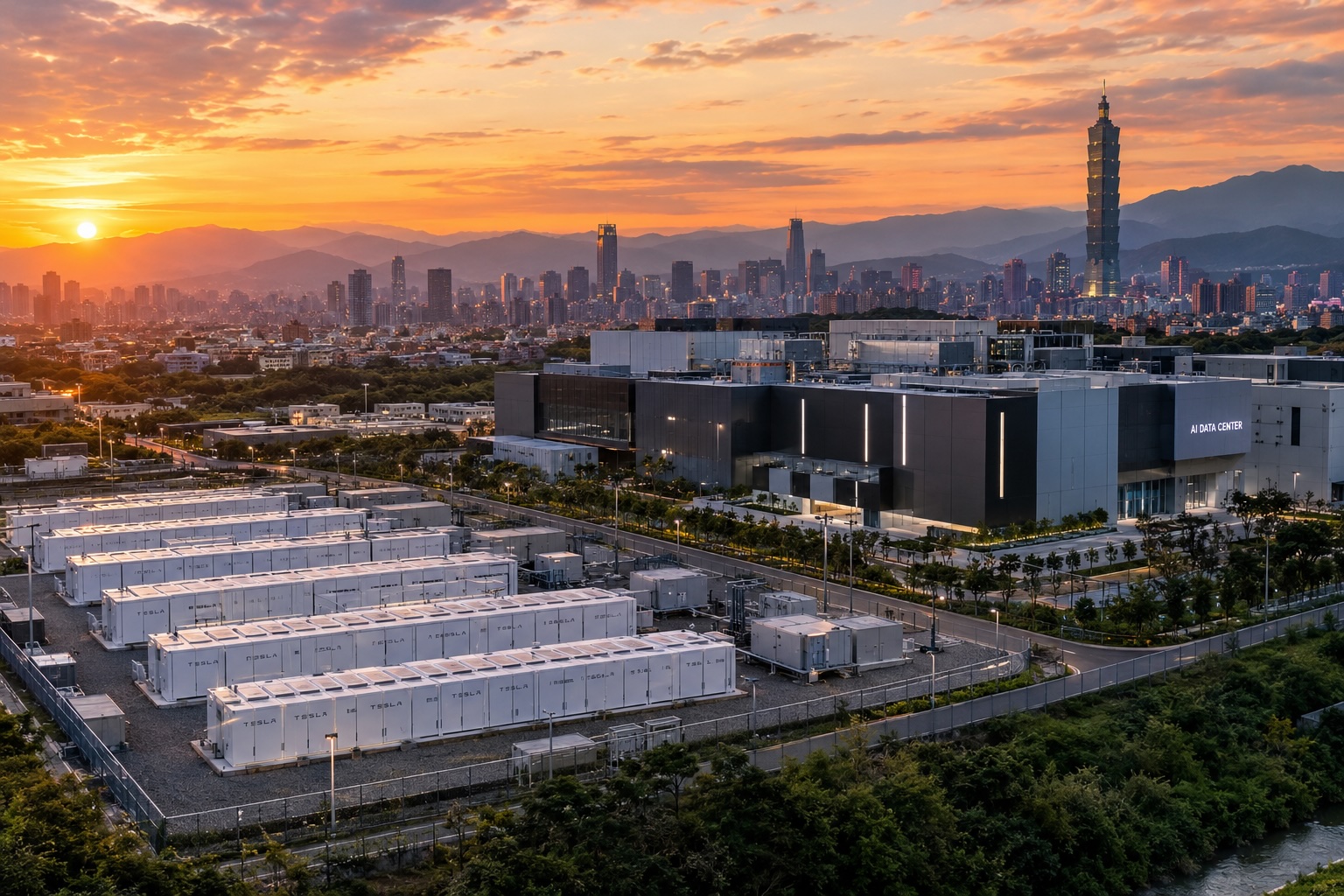
A Taiwanese power company has ordered 260 Tesla Megapack 2XL units, roughly 1GWh of storage, betting that electricity rather than chips will decide how fast AI data centers come online. Apollo Power signed the contract with Tesla’s Taiwan energy arm on October 8, according to the company’s filing with the Taiwan stock exchange.
The filing says the units are meant for behind the meter storage and resilient grid projects, with delivery in batches from the end of 2027 and sites operating in 2028. Apollo and Tesla did not disclose a price, citing a confidentiality agreement. Apollo plans to pay for the equipment through a cash capital increase and bank financing, and it noted the purchase is not revenue and does not mean it holds firm orders from its partners.
Biggo reported that only about 33 units are under signed customer contracts, with roughly 150 more in negotiation. The same report put total project investment near NT$130 billion, but that figure includes installation work, with the equipment itself making up about 40 to 50 percent. In other words, a large share of this order is Apollo reserving supply ahead of demand. Apollo’s chairman told local media global large storage supply is tight, which is why the company locked in the units early, according to Yahoo Taiwan Finance.
Apollo also launched an AI data center and grid resilience alliance with Phison, Gigabyte and Shihlin Electric. The pitch rests on a pilot at Phison’s Zhunan plant, where Apollo and Tesla Energy Taiwan installed grid forming Megapack 2XLs in June. Tesla Energy Taiwan general manager Sun Hsiao-Han said the project went from demo to 1GWh in four months, and that Tesla Energy has deployed more than 50GWh worldwide.
Taiwan’s cabinet has approved amendments that would require large energy users to install their own generation and storage, which gives enterprise storage a regulatory tailwind.
The deal fits a pattern Teslarati has tracked. Tesla’s Megablock targets 1GWh commissioned in 20 business days, a pitch aimed squarely at fast moving data center builds. Megapacks already back xAI’s Colossus in Memphis and a 400MW AI campus in Brazil. Sun Media adds that Megapack 2XL was named among the first products in Nvidia’s DSX Ready qualification for battery storage in AI factories.
Deliveries are more than a year away, so the real test is how much of that 260 unit order turns into signed customer contracts.
Energy
Tesla Model 3 and Model Y can now do what only Cybertruck could
Tesla Model 3 and Model Y can power your home with Powerwall 3 during outages.
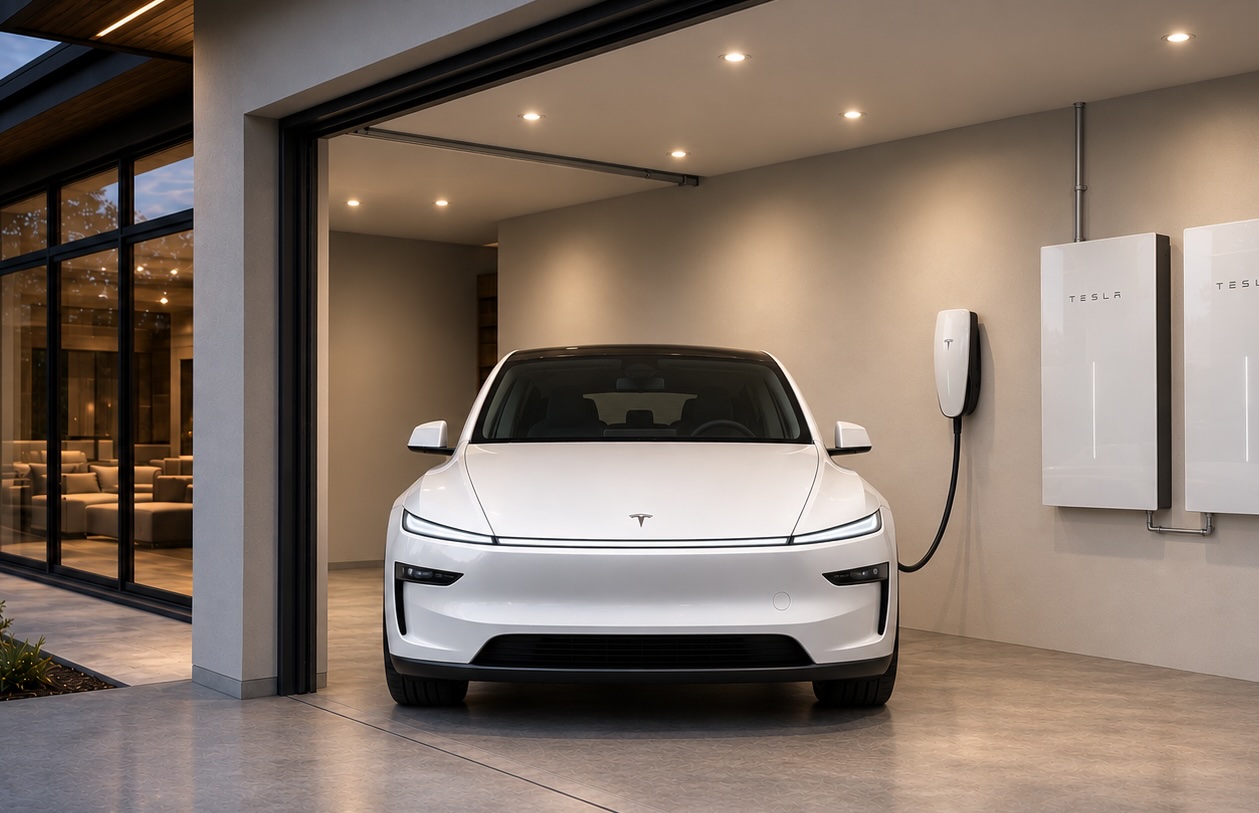
Tesla has turned its two top sellers into backup batteries for the house.
Tesla Energy announced on Tuesday that Powershare Home Backup is now available for new Model 3 and Model Y vehicles paired with a Powerwall 3, saying the car can “extend your home backup by over 2 days.” Minutes later, Tesla’s main account quoted the post with a broader pitch: “With Powerwall 3, every Tesla can now serve as your home’s backup battery.”
Until this week, the Cybertruck was the only Tesla that could send power back into a home, and that capability only began working alongside Powerwall 3 last month, after years of ambitious targets.
Tesla’s updated Powershare page says every Model 3 and Model Y ordered in the U.S. or Puerto Rico on or after October 1, 2026 can use the feature. Some, but not all, earlier cars also qualify. Owners can check on the touchscreen under Software, then Additional Vehicle Information, where a capable car shows “Powershare Support: Enabled.” As Electrek reported, bidirectional power on the two cars runs through an inverter Tesla calls PCS2 Lite, and the company has not said when that part entered production on each trim.
The home side is simpler. A house that already has a Powerwall 3 and either a Wall Connector 3 or Universal Wall Connector needs no additional equipment, and Tesla says compatibility is enabled through a software update. When the grid drops, the Powerwall and the car work together, with up to 11.52 kW of continuous power available. Tesla’s “over two days” estimate assumes a home using 30 kWh per day and a car starting at a 90 percent charge. Standard trims are rated for up to two days, while the Cybertruck adds more than three.
There are limits. Powerwall 2 and Powerwall+ support is listed as “coming soon.” Model S and Model X are not included, and Grid Support, the program that lets Cybertruck owners in Texas send power back to the grid during demand spikes for bill credits, is not available for Model 3 or Model Y.
The rollout also lines up with something Elon Musk said more than three years ago. At Tesla’s March 2023 Investor Day, Musk said, “I don’t think very many people are going to want to use bidirectional charging, unless you have a Powerwall.” Tesla has now shipped the feature for its volume cars with exactly that requirement attached.
The Powerwall pairing was the hard part on Cybertruck. Tesla told owners in December 2025 that Powershare with Powerwall had been pushed to mid 2026, and lead engineer Wes Morrill explained that two devices capable of forming a home’s grid have to negotiate which one leads during an outage, across multiple generations of hardware. With that work done for the truck, Tesla was able to extend it to the Model 3 and Model Y within a month.
Ford and GM have offered home backup from their EVs for several years, but both require a separate inverter and backup hardware. Tesla’s version leans on equipment many Powerwall 3 owners already have on the wall. Powershare for the two cars also ships as part of software update 2026.38.3, the same release that began delivering Halloween Mode on Tuesday.
Elon Musk
Google just picked SpaceX for its first step into orbital AI
Google will launch its first Project Suncatcher AI satellite on SpaceX’s Transporter-18 rideshare next week.
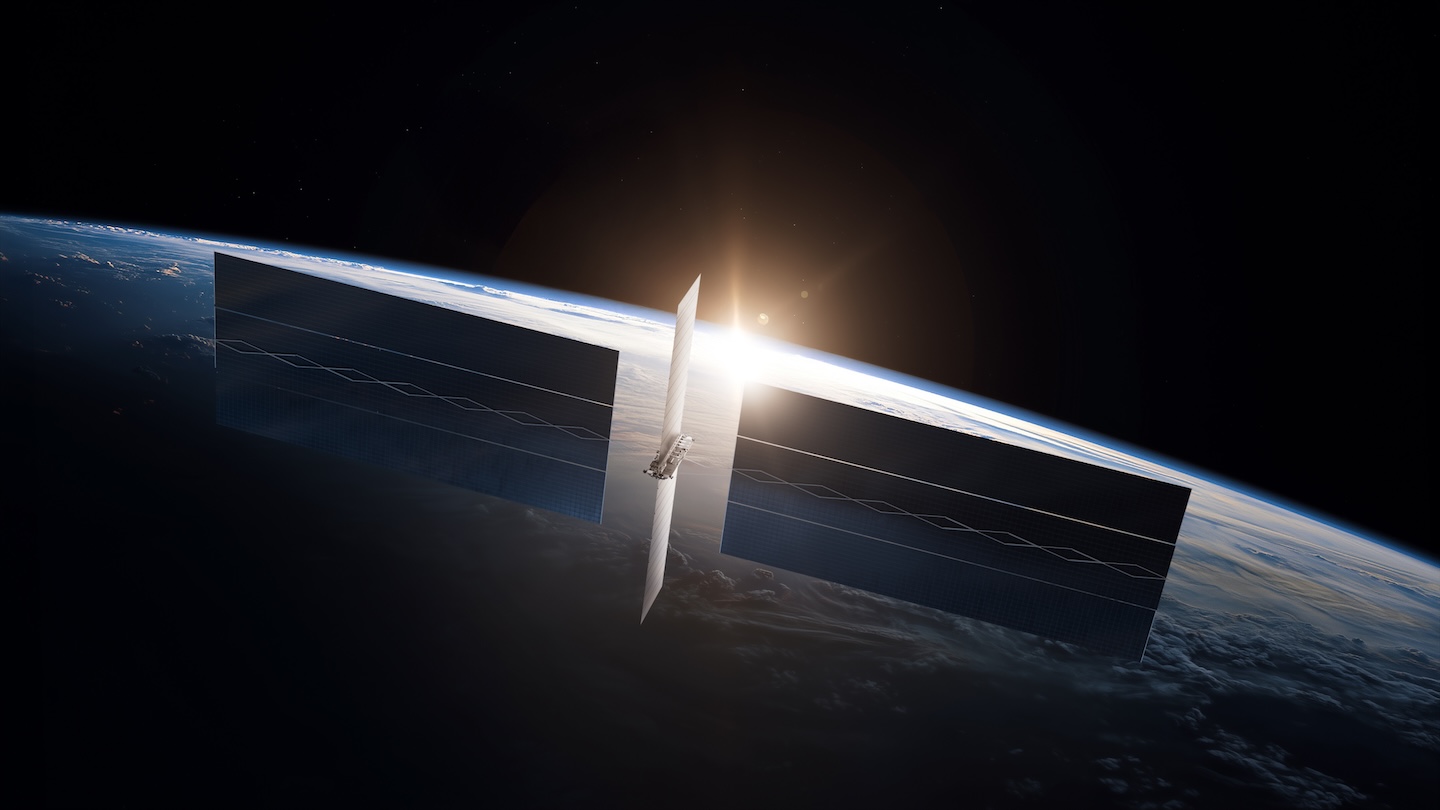
Google is about to put its own AI chips into orbit for the first time, and it is paying SpaceX to get them there.
The company said Thursday that the first in-orbit test of Project Suncatcher, its research effort to find out whether space can host large-scale AI computing, will fly next week on SpaceX’s Transporter-18 rideshare mission.
The satellite, called MVP, is about the size of a refrigerator and carries four of Google’s Tensor Processing Units, the same chips Google runs in its ground data centers. Google originally planned to launch two custom satellites in 2027, but chose to move faster by integrating its chips into a satellite.
MVP’s solar panels supply about one kilowatt of power, and Google will run Gemini models on the TPUs only in bursts of roughly 15 minutes before the chips shut down so the radiators can shed heat. In a blog post, Google said its Trillium TPUs survived vibration testing that mimicked sustained launch loads of up to 10g, with individual components seeing 50 to 100g, and handled a radiation dose greater than a five year mission would deliver.
SpaceX and Google mull massive partnership on Musk’s orbital data dream: report
Next week’s flight, slated for October 1, follows a relationship that became public in May, when Teslarati reported that Google was in talks with SpaceX for a launch deal tied to orbital data centers. Google also holds a stake of roughly 6% in SpaceX.
The two companies are chasing the same idea from very different starting points. SpaceX’s own orbital compute program is built around the AI1 satellite, a roughly 70 meter structure derived from Starlink V3 hardware that is designed for 150 kW of peak compute, about 150 times the power MVP will draw. Elon Musk has brushed off concerns about crowding orbit with those satellites, and SpaceX is building its Gigasat factory in Bastrop, Texas, to produce them, targeting an annualized rate of about 1 GW of space compute by the end of 2027.
Musk also posted on X on Thursday that “the amount of compute in space will obviously round up to 100% of all compute.”
Google has been more cautious in public. Its research estimates that launch prices need to fall below about $200 per kilogram before an orbital data center can compete with a ground facility on energy cost, a threshold the company believes could be reached around the mid 2030s. The Suncatcher team has said it expects the effort to remain a project rather than a product for years, which leaves the first real test of its hardware riding on a rocket from the company with the most aggressive timeline in the field.

Tesla reveals Optimus Academy, where robots teach themselves

The Starship moon landing number NASA and Elon Musk can’t agree on


